Core Pursuit Mechanics
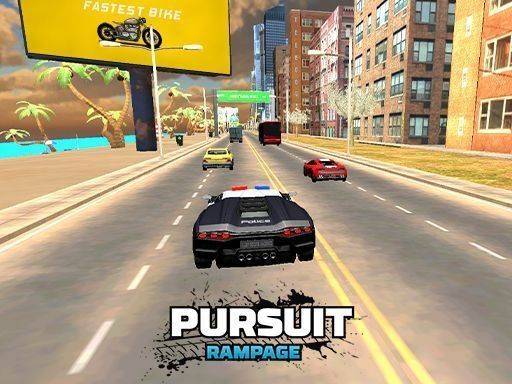
Urban Chase Driving Arcade places players behind the wheel of a patrol vehicle with a single clear goal: maintain visual contact with a target car ahead. The action unfolds across a sprawling cityscape filled with moving traffic, stationary barriers, and tight corners. Every session is a continuous loop where the only limit is the player’s ability to avoid collisions. The game rewards steady concentration and quick steering adjustments rather than raw speed. As the chase progresses, traffic patterns shift and road layouts become more demanding, ensuring no two runs feel identical.
Urban Traffic Dynamics
The city environment is not a static backdrop but an active participant in the chase. Vehicles merge from side streets, brake unexpectedly, and block lanes. Pedestrian crossings, construction zones, and narrow alleyways add layers of complexity. Players must read the road ahead and anticipate hazards before they appear. The density of traffic increases with distance traveled, pushing drivers to refine their spatial awareness. This dynamic system creates a natural difficulty curve that adapts to the player’s performance, keeping the experience challenging without feeling unfair.
Power-Up Strategy
Scattered along the route are temporary boosts that can turn the tide of a pursuit. A nitro boost provides a short burst of speed, useful for closing gaps or escaping tight spots. A shield offers a brief window of protection, allowing players to brush past minor obstacles without ending the run. Knowing when to activate these items is key. Grabbing a shield just before a dense traffic section can extend a run significantly, while saving nitro for open stretches maximizes its benefit. The placement of power-ups encourages risk-reward decisions, as they often appear in areas with higher obstacle density.
Scoring and Progression
Performance is measured through a combination of distance covered, near-miss maneuvers, and overall chase duration. Near-misses—passing dangerously close to other vehicles without colliding—add bonus points and require precise timing. The endless format means there is no final destination; the goal is simply to drive farther and score higher than previous attempts. This structure naturally encourages repeated play, as each run offers a chance to improve on personal records. No complex menus or tutorials interrupt the flow, allowing players to jump straight into the action.
Family-Friendly Design
The game is built around the principle that high-energy action does not require violent or inappropriate content. All visual elements are cartoon-style and non-threatening. Collisions result in a simple reset rather than destructive animations. The focus remains on driving skill and reaction time rather than combat or destruction. This makes the experience suitable for younger players while still offering enough depth to engage older audiences. Parents can feel confident letting children play without concerns about mature themes.
Mastering the Streets
Success in Urban Chase Driving Arcade comes from a combination of pattern recognition and calm decision-making under pressure. Experienced players learn to identify safe paths through traffic clusters and memorize the locations of power-up spawns. The game rewards those who can maintain a steady pace while making split-second lane changes. Over time, muscle memory develops for the controls, allowing for smoother navigation through the busiest intersections. The satisfaction comes not from winning a race but from extending a run a little further each time, proving that focus and practice pay off.